Courage
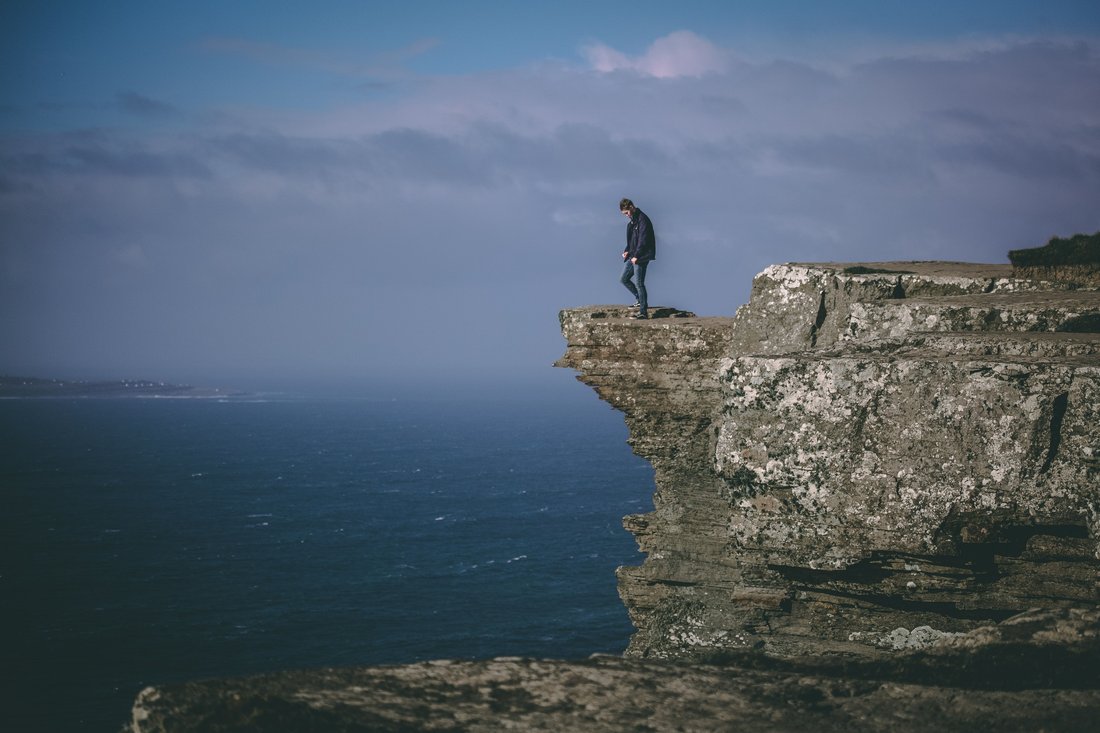
Rev. Bill writes that courage is not the absence of fear — it is what happens when something greater than fear becomes more important than fear itself. He explores courage in illness, aging, death, and the quiet courage of facing ourselves honestly.
If Humility teaches us to bow and Loyalty teaches us to stand faithfully for what is true, then Courage gives us the strength to take the next step. Courage is what allows us to live what we say we believe. It is easy to speak about love, truth, forgiveness, Oneness and service when life is comfortable. The real spiritual test comes when living those principles becomes difficult.
Every life will eventually ask something of our courage.
Sometimes it comes quietly. Sometimes it arrives like a storm.
We may be asked to face an illness, the loss of someone we love, financial hardship, loneliness, failure, betrayal, aging or the possibility of death. We may be asked to change something about ourselves that we have defended for years. We may have to leave a relationship that is hurting us. We may have to admit that we were wrong. We may have to begin again when we thought our life was already settled.
And sometimes courage asks us to stand alone.
There are moments when everyone around us believes one thing and something within us tells us another. There are moments when speaking the truth may cost us friendships, money, reputation, position or security. There are times when the easiest thing would be to remain silent, look the other way and let someone else carry the burden.
But the spiritual path is not always the easy path.
Courage is the willingness to walk it anyway.
The ego often confuses courage with toughness. It wants to prove that it is strong. It wants to win. It wants to dominate. It wants to show everyone that it is fearless. But there is another kind of courage that is much deeper.
True courage does not need to look powerful.
Sometimes courage is a whisper.
Sometimes it is saying, "I am afraid, but I am going to do what I know is right."
Sometimes it is saying, "I don't know what will happen, but I cannot continue living this way."
Sometimes it is simply getting out of bed and facing another difficult day.
There is courage in continuing.
There is courage in beginning again.
There is courage in asking for help.
There is courage in admitting that we cannot do everything ourselves.
And there is enormous courage in looking honestly at ourselves.
We often think courage means confronting the outside world, but one of the greatest battles we will ever fight is the battle within ourselves. It takes courage to look at our own anger, jealousy, dishonesty, selfishness, addictions, fears, resentments and wounds without creating excuses for them.
The ego would rather blame someone else.
It will tell us why our behavior was justified. It will remind us of everything someone else did wrong. It will build an entire story explaining why we are the victim.
Humility begins to loosen that story.
Courage takes us the rest of the way.
It asks, "What part of this belongs to me?"
That question can change a life.
There is great courage in taking responsibility for our own actions. Not shame. Not self-hatred. Responsibility.
We cannot heal what we refuse to see.
We cannot transform what we continually defend.
We cannot become free while protecting the very patterns that keep us imprisoned.
The courageous person eventually turns inward and says, "Show me the truth about myself."
That can be a frightening prayer.
But it can also be the beginning of liberation.
Courage is also required when life gives us physical pain. The human body has limits, and sooner or later every one of us encounters illness, injury, aging and the knowledge that this body is temporary. To face physical suffering with dignity is a profound form of courage.
This does not mean pretending that pain does not hurt. It does not mean refusing medical care or believing that spiritual strength makes us immune to illness. It means meeting the reality of our circumstances without surrendering our entire spirit to fear.
We can hurt and still love.
We can be afraid and still have faith.
We can become ill and still find meaning.
We can face death and still remain open to the mystery of life.
Eventually, courage may mean facing death itself.
None of us knows exactly what happens when this physical journey ends. Different spiritual traditions offer different understandings, and each person must ultimately walk through that mystery for themselves. But the fear of death can become one of the greatest teachers we have.
It reminds us that life is precious.
It reminds us not to waste our time.
It reminds us to say the things that need to be said.
To forgive while we can.
To love while we can.
To serve while we can.
And to stop postponing the life we were given.
I have always believed that some of the greatest courage in life is not found on battlefields, although the courage of those who risk their lives for others deserves profound respect. Throughout history, men and women have walked into wars and battles knowing they might not return. Soldiers, medics, firefighters, police officers, rescue workers and ordinary people have repeatedly placed themselves in danger to protect someone else.
There is something sacred about willingly accepting risk for another human being.
But courage is not limited to physical danger.
A mother raising a child alone may know courage.
A father caring for a dying spouse may know courage.
A person leaving an abusive relationship may know courage.
Someone starting over at seventy may know courage.
A person who finally tells the truth about something that has been hidden for years may know courage.
Someone who stands up for another person who cannot defend themselves may know courage.
A person who risks their money, reputation or security to help someone in need may know courage.
Courage has many faces.
Sometimes it carries a flag.
Sometimes it carries a hospital bag.
Sometimes it sits quietly beside a hospital bed.
Sometimes it walks away from a door and never goes back.
Sometimes it picks up the telephone and says, "I am sorry."
Sometimes it says, "No."
Sometimes it says, "Yes."
Sometimes it says, "Enough."
And sometimes it says, "I love you."
There is also courage in doing what may never be understood or appreciated by others.
One of the great traps of modern life is the need for approval. We want people to understand us. We want them to appreciate our intentions. We want them to agree with our decisions. But if our actions are dependent upon everyone else understanding them, we will rarely have the freedom to follow our deepest truth.
There are times when we must do what we believe is right even when no one applauds.
The spiritual life cannot be lived entirely by consensus.
If we are waiting for everyone to agree before we act from conscience, we may wait forever.
Courage is sometimes standing alone—not because we believe we are better than everyone else, but because we have reached a place where our conscience will no longer allow us to remain silent.
This is where Courage connects directly with Loyalty.
Loyalty without courage can become passive. We may know what is right but lack the strength to defend it. Courage gives loyalty a backbone.
And courage without humility can become arrogance.
A person can become convinced that every battle is their battle, every disagreement is an injustice, and every opinion they hold is sacred truth. That is not spiritual courage. That can simply be the ego looking for another battlefield.
Humility keeps courage clean.
It reminds us that we may be wrong.
It allows us to listen.
It gives us the ability to change our minds when new truth appears.
Real courage does not require us to be certain about everything.
It requires us to be honest about what we know and humble about what we do not know.
There is also courage in changing ourselves.
Many people would rather change their circumstances than change themselves. We want a different spouse, a different job, a different house, different friends, different government, different world. Sometimes circumstances truly do need to change. But sometimes the person who needs to change is the one looking in the mirror.
That can be the hardest work of all.
It takes courage to stop blaming.
Courage to forgive.
Courage to give up an old habit.
Courage to admit that our behavior has hurt someone.
Courage to ask for forgiveness.
Courage to become vulnerable.
Courage to love again after being hurt.
Courage to trust again after betrayal.
Courage to release the identity we have built around our suffering.
And courage to discover that perhaps we are not the person we have spent our entire life believing ourselves to be.
The ego likes familiar suffering because at least it knows who it is.
The soul wants freedom.
Sometimes courage means walking away from what is familiar and stepping into what is unknown.
This can be especially true in relationships. There are people who remain in abusive or destructive relationships because they are afraid of what will happen if they leave. Fear of loneliness, fear of financial insecurity, fear of judgment, fear of hurting another person and fear of starting over can become powerful chains.
There are times when staying requires courage.
There are times when leaving requires even more.
Knowing the difference requires wisdom, self-respect and an honest examination of what is actually happening. Spirituality should never be used as an excuse to remain in abuse. Forgiveness does not require us to remain available to someone who continually harms us. Love does not mean abandoning healthy boundaries.
Sometimes the courageous act is to say, "I love you, but I will not continue participating in this."
That too can be an act of love.
Courage also asks us what we are willing to risk for those we love.
Would we risk our comfort?
Our money?
Our time?
Our reputation?
Our safety?
Our plans?
True love eventually asks us to sacrifice something.
But the highest form of courage goes even further. Can we help someone we do not love? Can we offer compassion to someone who has never shown us compassion? Can we protect someone whose beliefs are different from ours? Can we stand up for someone we may never meet?
This is where courage begins to move beyond personal attachment and into Service.
If we believe in Oneness, then our compassion cannot be reserved only for people who are like us.
The Divine is present in all.
That realization changes the meaning of bravery.
The greatest battlefield may be the human heart.
And the weapons are Truth, Love, Forgiveness, Patience and Compassion.
Courage is required to enter that battlefield every morning.
There will be days when we fail. We will lose our temper. We will become afraid. We will make mistakes. We will retreat into old patterns. Courage does not demand perfection.
It asks us to get back up.
This is why courage is so closely connected with Positive Living. A positive life does not mean pretending that everything is wonderful. It means refusing to give our difficulties the final word. We can acknowledge pain without worshiping it. We can acknowledge fear without allowing it to become our master.
We can look at the darkness and still turn toward the Light.
We can say, "This is difficult," without saying, "This is hopeless."
That distinction matters.
Courage is not blind optimism.
It is conscious participation in life.
It is the willingness to meet reality as it is and still choose Love.
There will be moments when the world does not reward us for doing the right thing. There will be moments when our loyalty is misunderstood, our truth is rejected, our service is unnoticed and our courage is mistaken for foolishness.
Do it anyway.
Not because you need to prove yourself.
Not because you need to be recognized as spiritual.
Not because you need to win.
Do it because your conscience is clear.
Do it because Love asks it of you.
Do it because the Divine within you is calling you toward a greater expression of yourself.
And when you stand alone, remember that alone does not necessarily mean separate.
The realization of Oneness means that beneath the appearance of separation, we are never truly alone. The same Divine Life that moves through us moves through every being.
Humility taught us that we do not need to be greater than anyone else.
Loyalty taught us to remain faithful to what is worthy.
Courage now asks us to live that faithfulness when it costs us something.
This is where the Seven Power Virtues begin to reveal themselves as one path.
Each virtue leads into the next.
Each strengthens the others.
Each asks us to move a little farther away from the small, frightened, ego-centered self and a little closer to the Divine Self that knows Love, Truth and Oneness.
Courage is the willingness to take that step.
Again and again.
Even when we are afraid.
Even when no one understands.
Even when we must stand alone.
Even when the road ahead is uncertain.
Because sometimes the most courageous thing we can do is simply remain faithful to the Light, we have found within ourselves.
And then walk forward.
Fear and all.
What might you choose if fear were allowed to be present without making the decision for you?
Continue the Journey
Help Carry This Work Forward
If this has touched you, there are many ways to support Rev. Bill’s ongoing work — from gathering together to giving from the heart.
Support the Work →